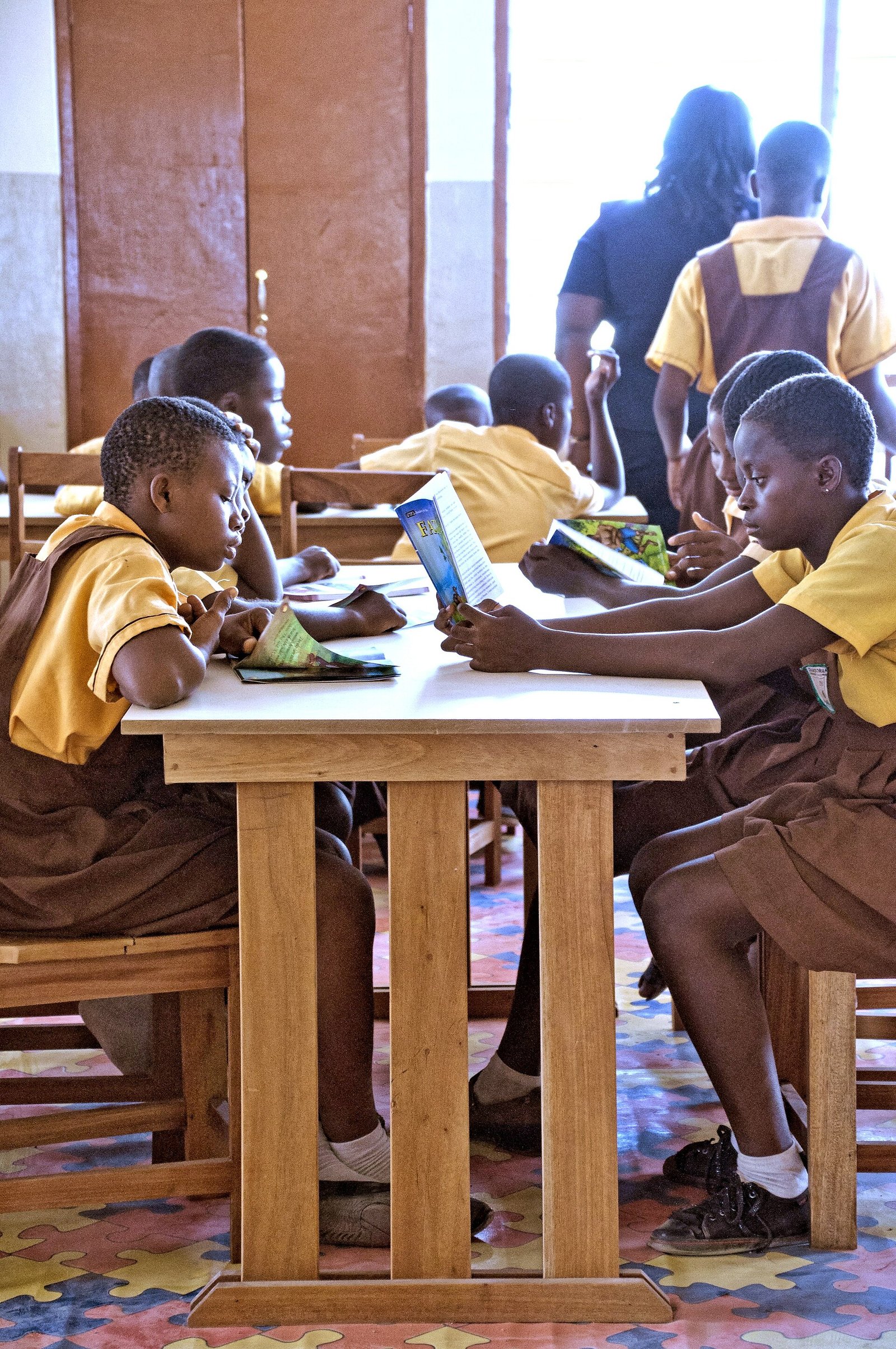
The gap in the free SHS policy
A widowed mother sells fried plantains by the roadside. Her child has passed the BECE and earned a spot in senior high school. She feels a moment of pride. Then she sees the prospectus list. The state covers tuition, but the shoes, uniforms, and feeding costs are not free. For a family living on pennies, these hidden costs are a wall. The child stays home while the classroom seat remains empty.
This is the reality for many families under the Free Senior High School policy introduced in 2017. The government aimed to remove the financial barriers to secondary education by covering tuition fees for all students. On paper, this is a massive win for accessibility. It ensures that the cost of instruction does not stop a child from learning. However, the policy does not cover every expense required to actually attend school.
We see this every week in our work with vulnerable children. When a student is placed in a boarding school, the financial pressure shifts from tuition to the prospectus. This list of requirements often includes several sets of uniforms, specific footwear, trunks, and toiletries. These items are not free. For a mother who earns barely enough to eat, these costs are impossible to meet.
The complexity of the school system means that the burden on parents varies depending on the type of school. Boarding students face the highest hidden costs. While the government provides the basic meals, there are often supplementary feeding costs or personal allowances needed for the term. These out of pocket expenses create a silent barrier.
A child cannot enter a classroom without a uniform. They cannot sleep in a dormitory without a mattress or a blanket. When the state only covers the tuition, it leaves a gap that poor families cannot bridge. This gap turns a free policy into an unreachable dream for the most marginalized. The result is a cycle where the poorest children are left behind despite the promise of free education.
Breaking down the boarding school Ghana fees
The term free education is often misunderstood by those outside our borders. While the government covers the tuition and basic boarding costs, the actual cost of getting a child into a classroom remains high. We see this every week when mothers come to us in tears. They have the admission letter, but they lack the cash for the basic requirements.
Uniforms are the first major hurdle. Every student needs multiple sets of clothes to last the term. This includes the formal school dress and the sports gear for physical education. Shoes are another heavy expense. Students need sturdy black shoes for class and sneakers for the field. These items are mandatory for attendance because schools enforce strict dress codes. A child without the correct uniform may be sent home.
Textbooks and stationery add to the burden. Each subject requires specific books that are not always provided by the state. We often help families buy notebooks, pens, and mathematical sets. These tools are essential for survival in a boarding environment. Many children struggle to keep up with their lessons when they have to share a single book with a classmate.
Then there are the PTA levies. These are fees set by the Parent Teacher Association to maintain facilities that the government budget does not cover. These levies pay for things like security, water pumps, and cleaning supplies. Although they are not tuition, they are effectively compulsory. A parent who cannot pay the PTA levy often finds their child facing social pressure or administrative hurdles.
The financial pressure starts long before the first day of school. Many families are already exhausted by the time they hit the BECE wall and the associated costs of basic education. For a widowed mother, these combined costs are an impossible mountain. We work as Muslim and Christian together serving every child to bridge this gap. We ensure that the lack of a pair of shoes does not end a child's dream of an education.

The financial burden of feeding and transport
The government covers the tuition for boarding students, but the plate of food remains a private expense. We see this every week when parents struggle to provide enough sustenance for their children. School meals are often basic and insufficient for a growing teenager. Parents must buy extra bags of rice, gari, and canned proteins to ensure their children do not go hungry. These supplementary food items are not cheap. The price of basic grains fluctuates, making it hard for a widowed mother to plan her monthly budget.
Many students find themselves hungry during the term. This affects their concentration in the classroom. When a child is starving, they cannot focus on mathematics or science. We work with families who must choose between buying a bag of maize or paying for a child's basic toiletries. It is a heartbreaking choice. The cost of feeding a student for a full academic year can often exceed the cost of the actual schooling.
Transport adds another heavy layer to the total cost. Most students do not live within walking distance of their assigned schools. They must travel long distances to get to campus at the start of the term. They also travel back home during the short breaks. For families in rural areas, this requires hiring private vehicles or spending hours on crowded buses. The cost of luggage transport for trunks and mattresses is an additional fee that catches many parents by surprise.
These expenses accumulate quickly. A single trip can cost a significant portion of a mother's monthly income. When you add the cost of food and transport, the word free becomes a misnomer. Many children drop out because their parents simply cannot afford the logistics of boarding. You can help a child stay in the classroom when you fund an SHS year through our program. We are Muslim and Christian together serving every child who lacks these resources. The financial strain on the family does not end when the school bell rings.
Exam fees and the BECE wall
The promise of free senior high school is a powerful tool for development. However, the path to that door is blocked by a financial barrier we call the BECE wall. Before a child can even apply for a boarding school place, they must sit for the Basic Education Certificate Examination. While the tuition at the next level might be free, the costs to actually take these exams are not. We see this every week when parents come to us in desperation. They have worked for years to keep their children in primary school, only to find they cannot afford the final registration fees.
These fees act as a filter that removes the poorest children from the system. If a family cannot pay for the BECE, the child cannot get the certificate required for SHS placement. It is a cruel irony. The state offers a free seat in a classroom, but the ticket to enter that classroom costs money that many widowed mothers simply do not have. This gap creates a cycle of exclusion. A child who is bright and hardworking remains stuck at the basic level because of a few hundred cedis.
The financial pressure does not end once they enter senior high school. Students eventually face the West African Senior School Certificate Examination (WASSCE). These fees are another hurdle. For a family already struggling with the hidden costs of boarding, the WASSCE payment can be the breaking point. A student can spend three years studying and attending classes, only to be unable to sit for the final exams. Without those results, they cannot graduate or enter university.
We work as Muslim and Christian together serving every child to ensure these fees are covered. We know that a missing payment is not just a clerical error. It is a lost future. When a child is stopped by the BECE wall, they often end up back on the streets or in low paying labor. We believe that no child should be denied a degree because their parents could not afford the exam registration.
Comparing costs across age groups
The financial burden of supporting a child changes as they grow. We see this every week when we look at the different needs of the children in our care. The cost of providing basic necessities increases as a child enters their teenage years. This shift creates a significant gap in the funding we need for different age groups.
Data from Sedarvp Ghana shows a clear difference in these expenses. For children between the ages of 5 to 12, the yearly cost is 100 dollars. This amount covers the essentials for younger children who have smaller appetites and simpler needs. It allows us to provide stability for those who have lost their parents or are living on the streets.
Once a child reaches the age of 13 to 18, the cost doubles. The yearly expense for this group is 200 dollars. This increase is largely due to the demands of boarding school and the physical growth of adolescents. Teenagers require more food and more expensive school supplies. They also face more complex social and emotional challenges as they prepare for adulthood.
Managing these two different cost structures requires careful planning. We must ensure that our resources are distributed fairly so that no child is left behind. A widowed mother might be able to manage the costs for a young child, but the jump to 200 dollars for a teenager can be overwhelming. This is where the support of our donors becomes vital.
We are Muslim and Christian together serving every child regardless of their background. This unity helps us focus on the actual needs of the students. Whether a child is seven or seventeen, they deserve a safe place to sleep and a full stomach. The difference in cost does not change the value of the child.
The jump from 100 dollars to 200 dollars represents more than just a number. It represents the transition from childhood to the threshold of independence. Providing this support ensures that poverty does not stop a bright teenager from finishing their education.
How donor funding closes the gap
The gap between a government policy and a child's actual presence in a classroom is often measured in small amounts of money. We see this every week when mothers come to us in desperation. They have the admission letter, but they cannot afford the basic items that make boarding school possible. A simple gift of 200 dollars changes the entire trajectory for one student. This amount secures a full year of the necessary supplies and fees that the state does not cover. It means a child can sleep in a bed and eat regularly while they study.
Trust is the only way this system works. We know that people giving from across the world want to know their money reached the right hands. This is why we send receipts within 48 hours of receiving a donation. We do not leave our supporters guessing. We document distributions with photos and short videos so you can see the uniforms and books being handed over to the children. For those who choose to give regularly, we provide monthly reports to track the progress of the students.
Our team operates on a foundation of shared faith and purpose. This unity reflects the spirit of the families we support. We believe in total openness with everyone who helps us. Anyone can request our documents on WhatsApp if they have questions about our operations. We also welcome those who want to see the work firsthand. Anyone can arrange a field visit or a live call during a distribution to witness the impact.
When a widowed mother knows her child is safe in school, her own burden lightens. The 200 dollar gift does more than buy soap and notebooks. It removes the crushing anxiety of poverty from a household. It allows a student to focus on their lessons instead of their hunger. These contributions ensure that the promise of free education becomes a reality for the most vulnerable children in our care.
If you would like to help a student stay in school, you can find more information on our giving page. Please visit ../donate.html to see how you can support a child.

FAQ
What are the hidden costs of free SHS in Ghana?
While tuition is covered, students still face many expenses. These include uniforms, textbooks, and personal hygiene items. Many children also need money for transportation and food. We see these costs prevent many poor children from staying in school. These gaps often fall on widowed mothers who have nothing left to give.
How much does it cost to support a boarding student in Ghana?
Supporting a boarding student involves more than just tuition. Costs cover meals, dormitory fees, and essential school supplies. The total amount varies based on the specific school requirements. We work to cover these needs so orphans can focus on their studies without worry.
Does the government pay for WASSCE exam fees?
Government coverage for secondary education does not always extend to all final examination fees. Some students find themselves unable to sit for these exams because they cannot afford the registration. This creates a huge barrier for those finishing their education. We help bridge this gap for our children.
How do I verify where my donation for school fees goes?
We send receipts within 48 hours of your gift. Our team documents distributions with photos and short videos to show the impact. Recurring donors receive monthly reports on the children they support. You can also request our documents on WhatsApp or arrange a live call during a distribution.
