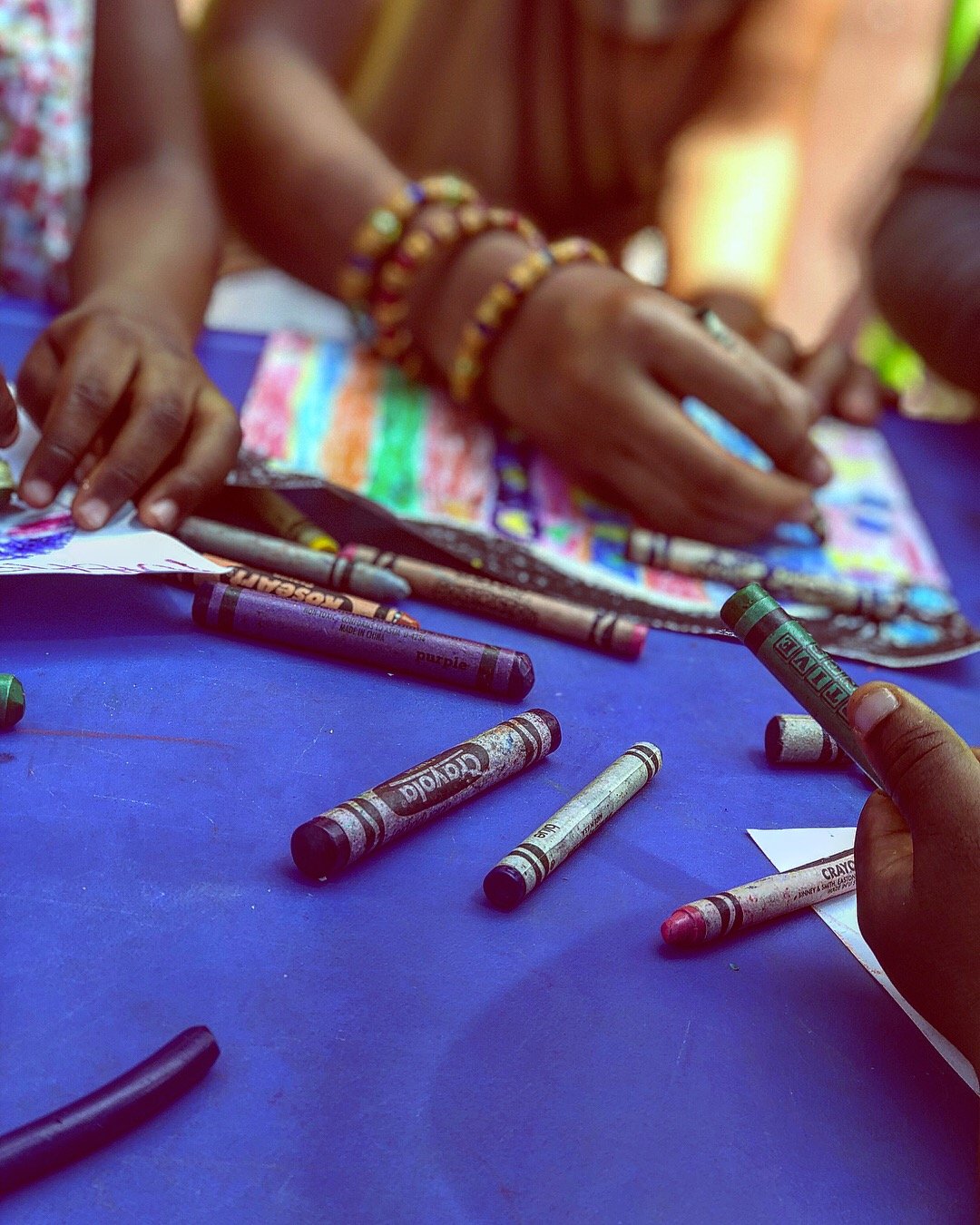
Why World Children's Day matters for Ghana
A 2011 census counted 61,492 street-connected persons under 18 in Greater Accra. Many of these children sleep on concrete or under plastic sheets. They wake up before dawn to sell small items in traffic. While international laws promise them protection and health care, the reality is different. They exist in the gaps of government systems. We see these children every day. They are not just numbers in a census.
Every November 20, the world marks World Children's Day. This date reminds us that every child has a right to a safe home and an education. These rights are universal. They should not depend on where a child is born or how much money their parents have. A child in a wealthy home and a child on the street deserve the same basic protections.
In Ghana, we have official documents that promise these rights. The law says children should be protected from abuse and hunger. However, the distance between the paper and the pavement is wide. Many children spend their days working in hazardous conditions instead of sitting in a classroom. They face hunger that no child should ever know.
We see this struggle every week. For many, the promises of international treaties feel like fairy tales. They do not feel the protection of the law when they are cold at night. They do not feel the reach of health care when they are sick. This is why this global day is so necessary for us.
It forces us to look at the children who are often ignored. It asks us why thousands of minors still live without stable shelter. World Children's Day is not about celebrations or parades. It is a call to close the gap between what the law says and what the child experiences. We believe that every child is a gift regardless of their background.
The invisibility of street children in state systems
When we walk through the streets, we see children who are physically present but legally invisible. They exist in the open, yet they are missing from the databases that determine who receives help. Most government support systems in Ghana are designed around the concept of a stable household. This structure creates a wall that street children cannot climb. If a child does not have a registered home or a recognized head of household, they often fall through the cracks of the state safety net.
We see this every week with the Livelihood Empowerment Against Poverty (LEAP) program. This cash transfer system is meant to help the poorest people survive. However, the registration process usually requires a household unit to qualify for the funds. A child living on the street has no such unit. They are not part of a registered home, so they cannot be listed as beneficiaries. This means the children who need the money most for food and clothing are the ones the system cannot see.
Health care follows a similar pattern of exclusion. The National Health Insurance Scheme (NHIS) is the primary way families access affordable medical treatment. Like the cash transfers, NHIS registration is typically tied to household records. Without a permanent address or a legal guardian to anchor their application, street children remain uninsured. They cannot visit a clinic without facing costs they cannot afford. A simple infection or a fever becomes a crisis because there is no insurance card in their pocket.
These gaps are not accidental. They are the result of a system that assumes every child has a roof and a parent. For the orphaned and the abandoned, this assumption is a barrier to their basic rights. We work as Muslim and Christian together serving every child, and we know that the lack of a paper trail should not mean a lack of care. These children deserve the same protection as those with a home. They remain invisible to the state while their hunger and sickness are very real.

Understanding the scale of street connectivity
To address the needs of the children we serve, we must first look at the numbers. The 2011 census data for Greater Accra provides a necessary window into this crisis. It shows us that the presence of children in public spaces is not a single, uniform experience. Instead, there are distinct groups of children who interact with the street in different ways.
We distinguish between those who are children of the street and those who are children on the street. The first group represents 65 percent of the population. These children have no home to return to at night. They live, sleep, and eat in the open air. For them, the street is their only permanent address.
The remaining 35 percent are children on the street. These young people usually have a family or a home. They spend their days working or begging to help their parents survive. They return to a shelter when the sun goes down. While they have a roof, their childhood is still spent in the harsh environment of the road.
We see this every week in our work. The distinction matters because the support each child needs is different. A child of the street requires full residential care and total stability. A child on the street might only need school fees and food to prevent them from slipping into total homelessness.
Our team consists of Muslim and Christian members working together to serve every child. We do not let religious differences stop us from reaching those in need. This unity allows us to reach deeper into the community.
The scale of this issue is daunting. Many people see a crowd of children and assume they all share the same story. The data proves that the reality is more complex. Understanding these percentages helps us allocate resources more effectively. We can better support widowed mothers who struggle to keep their children off the street. The 2011 census reminds us that the struggle for survival takes many forms.
The crisis of out-of-school children in the north
Education is a fundamental right for every child. In the northern parts of Ghana, this right remains an unfulfilled promise for too many. We see the consequences of this gap every week when we meet children who have never stepped inside a classroom. They are not choosing to stay away. They are trapped by poverty and a lack of resources.
The numbers from the Ghana National Household Registry tell a sobering story. Data from 2018 and 2019 reveal the scale of this educational void. In the Upper East region, there are 66,520 children who are out of school. These are thousands of young lives stalled before they can even begin to learn.
The situation is equally dire in the Upper West region. According to the same registry data, 42,218 children there are missing out on their schooling. This is not just a statistic. It represents a generation of children who cannot read or write. They often end up in precarious labor to help their families survive.
Many of these children are orphaned or come from homes led by widowed mothers. These women struggle to provide even the most basic school supplies. When a mother must choose between a meal and a notebook, the meal wins. This cycle of poverty keeps the children on the streets instead of in desks.
We believe that faith and compassion must drive our response to this crisis. Our team is Muslim and Christian together serving every child regardless of their background. We work to bridge these gaps by providing the support these families lack. It is a slow process but a necessary one.
The lack of schooling creates a ripple effect of vulnerability. Children without an education are more likely to be exploited. They lack the tools to advocate for themselves. This makes the regional disparity in schooling a matter of urgent human rights. We must focus on the north to ensure no child is forgotten.
The reality of residential homes in Ghana
Many people assume that every child in a residential home is a complete orphan. This is a common misconception that clouds the public understanding of child welfare in our country. We see this every week when we interact with families and children. The truth is often more complicated than a simple lack of parents.
UNICEF Ghana provides data showing that there are 4,000 children living in residential homes. A shocking 80 percent of these children have at least one living parent. This means that the majority of children in institutional care are not actually orphans. They are often there because of extreme poverty or family breakdowns.
The cycle of poverty forces some parents to make impossible choices. They may feel they cannot provide a single meal or a school uniform. In these cases, a residential home seems like the only way to ensure the child survives. It is a heartbreaking situation for both the parent and the child.
We believe that a child belongs with their family whenever possible. Separation can leave deep emotional scars that last a lifetime. When a child is placed in a home despite having a parent, the bond is often strained. This makes the eventual process of reunification much harder.
Our approach at Hope for Ghana Kids focuses on the whole family. We are Muslim and Christian together serving every child. By supporting widowed mothers and struggling parents, we help keep families together. This prevents more children from entering the residential system.
Institutional care should be the last resort. It cannot replace the love and security of a home. The data from UNICEF Ghana reminds us that we must address the root causes of poverty. If we support parents, we protect the rights of the child to grow up in a family. This is the only way to reduce the number of children living in residential homes.
Turning rights into action with transparency
Rights remain empty promises if children do not have food or a place to sleep. We see this every week in the lives of the children we support. When you choose to help, you are not just giving money. You are providing the actual tools needed to make these rights a reality for orphaned children and widowed mothers. We know that trust is the foundation of this relationship. You deserve to know exactly where your contribution goes.
Our approach to transparency is simple and immediate. We send receipts within 48 hours of receiving a donation. This ensures there is a clear record of your generosity. We do not stop at paperwork. We document our distributions with photos and short videos so you can see the impact. Recurring donors receive monthly reports to keep them connected to the progress of the children.
Communication is open and direct. Anyone can request our documents on WhatsApp. We believe in being accessible to those who make our work possible. If you want to see the work firsthand, you can arrange a field visit. We also allow live calls during a distribution. This allows you to witness the moment a child receives a meal or a school book.
Our identity is rooted in unity. This interfaith spirit guides how we treat every person who comes to us for help. We do not discriminate based on faith or background. We focus on the shared human need for dignity and care.
Every child deserves a chance to grow up safe and educated. Your support allows us to provide shelter and schooling to those who have nothing. It is a practical way to turn global rights into local action. We invite you to be part of this effort.
If you would like to help us support these children and their mothers, please visit ../donate.html. Your kindness makes a real difference in their lives.

FAQ
What is World Children's Day?
This global event celebrates the rights of every child. It is a day to advocate for the protection and well-being of young people everywhere. We use this time to bring attention to the specific needs of the most vulnerable children in our communities.
How are street children excluded from LEAP in Ghana?
Children living on the streets often lack the formal identification needed for government programs. Without a permanent address or birth certificate, they cannot register for the Livelihood Empowerment Against Poverty program. This leaves them without a safety net.
How do I know my donation reached a child in Ghana?
We send receipts within 48 hours of your gift. Our team documents distributions with photos and short videos to show the impact. Recurring donors receive monthly reports. You can also request our documents via WhatsApp to see how we work.
Can I visit the children supported by Hope for Ghana Kids?
You are welcome to see our work. Anyone can arrange a field visit to meet the children. If you cannot travel, we can organize a live call during a distribution.
And if you are ready to turn good questions into good deeds, feed a child this week. Every gift gets a receipt within 48 hours and a photo of what it became.
